Information technology has spent decades building stronger defenses around data, networks, devices, and digital infrastructure. Firewalls have become more sophisticated, authentication has become more layered, and security teams now monitor environments around the clock for suspicious activity. Yet one part of operational security can still be surprisingly easy to overlook: the physical environment where technology professionals actually work.
Modern IT operations extend far beyond an employee sitting behind a computer in a climate-controlled office. Technicians work inside data centers, climb through equipment rooms, maintain network infrastructure, support major events, travel to remote installations, and respond to failures in warehouses, industrial facilities, temporary command centers, and outdoor locations. The broader the technology footprint becomes, the broader the definition of preparedness must become with it.
That shift is creating a stronger connection between cybersecurity, operational resilience, workplace safety, and emergency readiness. Protecting an organization means protecting information and infrastructure, but it also means recognizing that the people maintaining those systems may face physical emergencies that have nothing to do with malware or stolen passwords.
IT Security Has Expanded Beyond the Network
Traditional information security is centered on protecting confidentiality, integrity, and availability. Those principles remain essential, and the basic concept of information security on Wikipedia illustrates how broadly information assets and risk management can be understood.
The modern technology environment, however, has become increasingly physical. Cloud computing still depends on enormous buildings filled with servers, electrical distribution equipment, cooling systems, backup power, networking hardware, batteries, cabling, and sophisticated monitoring equipment. Wireless systems still require physical access points. Fiber networks still require installation crews. Telecommunications infrastructure still requires technicians to travel into the field.
Even cybersecurity programs increasingly recognize security as an organizational risk issue rather than something confined to an IT department. The NIST Cybersecurity Framework 2.0 connects cybersecurity risk management with broader enterprise risk management and workforce considerations. That is an important distinction because a resilient organization has to consider the people, facilities, processes, and technology required to keep essential operations functioning.
A server can be replaced. A backup can restore lost information. A compromised password can be reset. When a serious physical injury occurs, however, the first few minutes can carry much greater consequences.
The People Behind Critical Technology Still Face Physical Risks
Technology professionals routinely work in environments that contain hazards most customers never see. Data centers contain substantial electrical infrastructure. Installation teams may work around construction areas, ladders, tools, racks, loading docks, vehicles, generators, temporary cabling, and heavy equipment. Field technicians can find themselves miles away from the nearest office.
The growth of operational technology adds another dimension. IT teams are increasingly involved with industrial control systems, building automation, connected equipment, security systems, transportation infrastructure, manufacturing technology, and other environments where physical and digital systems intersect.
This is one reason IT security news increasingly includes discussions about critical infrastructure instead of focusing exclusively on traditional desktop computers and corporate servers. Organizations following the FBI Cyber Alerts can see how cybersecurity advisories now regularly address operational technology, industrial systems, infrastructure providers, and organizations responsible for essential services.
Those environments require a broader approach to readiness.
The cybersecurity team may have an incident response plan for ransomware, but an organization should also know what happens when someone is injured while responding to an incident. A network operations team may have redundant communications, backup generators, and spare switches, yet physical emergency equipment also deserves consideration as part of a comprehensive safety strategy.
Where the GP IFAK Level 2 Fits Into Modern IT Preparedness
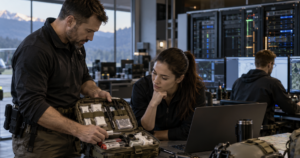
An individual first aid kit, commonly called an IFAK, is intended to place important emergency medical supplies within reach when they are needed. Unlike the familiar office first aid box designed primarily around minor cuts and routine injuries, more advanced trauma-oriented kits may include equipment intended for serious bleeding and other traumatic injuries.
The GP IFAK Level 2 is described as a compact trauma kit containing items such as tourniquets, hemostatic dressings, chest seals, airway-related equipment, bandages, gauze, and other medical supplies. Its portability makes this type of equipment relevant to environments where employees or trained personnel may need emergency supplies available without relying exclusively on a stationary first aid cabinet.
That does not mean purchasing medical equipment replaces professional emergency services or proper training. It means organizations can think more carefully about how quickly appropriate supplies can be reached during an emergency and which trained personnel are expected to use them.
For IT departments managing large facilities, remote equipment sites, event technology, mobile operations, or critical infrastructure, accessibility can become an important part of preparedness.
Cyber Resilience and Physical Resilience Share the Same Philosophy
Some of the strongest principles in cybersecurity translate remarkably well to physical emergency preparedness.
Security professionals assume incidents will eventually occur. They create backups before systems fail. They establish response procedures before an attack happens. They maintain spare hardware before equipment breaks. They conduct exercises before an actual emergency forces employees to make decisions under pressure.
Physical preparedness follows the same logic.
The NIST Contingency Planning guidance describes contingency planning as a coordinated strategy involving procedures and technical measures designed to help organizations recover systems and operations following disruptions. Although the guidance primarily addresses information systems, the underlying operational principle is familiar: preparation should happen before the disruption.
Effective resilience depends on identifying foreseeable risks, determining what resources may be needed, deciding where those resources should be located, assigning responsibilities, training appropriate personnel, and periodically reviewing the plan.
That philosophy can apply to cyber incidents, natural disasters, equipment failures, fires, workplace injuries, severe weather, and other events capable of interrupting operations.
Data Centers Are Physical Facilities, Not Abstract Clouds
The phrase “the cloud” can make technology feel almost intangible. Behind that terminology are physical servers operating inside physical facilities.
Data centers contain dense concentrations of computing infrastructure along with power systems, cooling equipment, generators, batteries, elevated floors, racks, cabling, and fire suppression systems. Employees and contractors may be moving equipment, installing hardware, servicing systems, or responding to outages at all hours.
Network infrastructure carries similar realities. The NSA Network Infrastructure Security Guidance emphasizes the need to protect network environments through strong design, configuration, monitoring, and access controls. Digital safeguards remain fundamental, but the people implementing those safeguards occupy real environments where accidents can occur.
This is particularly important during emergencies. A serious outage may send technicians into equipment rooms during unusual hours. Severe weather could force staff to work under difficult conditions. Infrastructure failures may require employees to access generators, network closets, rooftops, outdoor communications equipment, or temporary workspaces.
Emergency readiness needs to travel with the workforce.
Field IT Has Changed the Security Equation
The IT department of the past could often be pictured as a centralized group supporting computers inside one office building. That description no longer fits many organizations.
Today’s technical workforce may include telecom installers, audiovisual specialists, cybersecurity engineers, event technology crews, wireless technicians, infrastructure contractors, network engineers, smart-building specialists, security system technicians, and employees managing Internet of Things equipment.
Some work from vehicles. Some enter industrial facilities. Some support concerts, conferences, sporting events, festivals, construction projects, government facilities, warehouses, and remote infrastructure.
That dispersion changes risk.
A first aid cabinet mounted in a headquarters break room provides little value to someone servicing equipment at a remote site. Emergency resources have to be located where emergencies might actually occur.
The same principle already exists throughout cybersecurity. Organizations do not install a single firewall and assume every endpoint is protected forever. Security controls are distributed throughout the environment according to risk. Physical preparedness can benefit from similar thinking.
Preparedness Should Be Layered
Cybersecurity professionals frequently talk about defense in depth. Instead of depending on one security control, organizations create multiple protective layers.
The CIS Critical Security Controls provide a prioritized framework of cybersecurity safeguards intended to reduce common and significant cyber risks. The philosophy behind layered security is straightforward: no single control can address every possible scenario.
Emergency preparedness should be similarly layered.
Emergency communication systems represent one layer. Clearly marked exits provide another. Fire extinguishers, automated external defibrillators, first aid supplies, emergency lighting, employee training, security procedures, evacuation plans, and relationships with local emergency responders all contribute additional layers.
More capable portable trauma supplies can become another element where an organization’s risk assessment indicates they are appropriate.
The objective is not to turn IT employees into emergency physicians. The objective is to make sure organizations have considered what resources trained personnel may need during the period before professional medical responders arrive.
Training Matters as Much as Equipment
Equipment is only one component of readiness.
Organizations that purchase emergency medical supplies should also consider appropriate first aid, CPR, bleeding-control, and workplace safety training based on their environment and applicable requirements. Employees should understand the limits of their training and know how to contact professional emergency services immediately.
The same principle applies in cybersecurity. Purchasing expensive security software accomplishes little if employees do not know how to recognize suspicious behavior or administrators do not know how to respond to alerts.
The FBI Cybersecurity Best Practices emphasizes practical security behaviors alongside technology. Updates, access controls, device security, authentication, and employee practices work together to create stronger protection.
Physical emergency readiness works the same way. Supplies, procedures, communications, and trained people form a system. Removing any one of those components can weaken the response.
Operational Security Is Becoming a Broader Discipline
Cybersecurity teams have spent years learning that resilience cannot depend on preventing every possible incident. Organizations also need the ability to respond, recover, and continue operating.
NIST’s Guide for Cybersecurity Event Recovery emphasizes recovery planning, prioritization of resources, realistic testing, and improvement based on previous events. Those concepts have value well beyond cyberattacks.
Prepared organizations think about what happens next.
When systems fail, employees know the recovery process. When communications go down, alternate channels exist. When facilities become inaccessible, continuity plans identify alternatives. When emergencies occur, personnel should know who is responsible for contacting emergency services, directing responders, assisting employees, and accessing emergency equipment.
This broader interpretation of security reflects how deeply technology has become connected to normal business operations. IT departments are no longer responsible for isolated computers. They often support the nervous system of the organization.
Cyber Threat Intelligence Reinforces the Need for Readiness
Technology professionals already operate in an environment where threats evolve continuously.
The NSA Cybersecurity Advisories and Guidance repository regularly publishes technical information addressing emerging vulnerabilities, infrastructure risks, network security, zero-trust architecture, and other security issues. The constantly changing nature of cyber risk has conditioned IT departments to monitor developments and adjust defenses.
Physical and operational risks deserve similar attention.
A growing organization may open new facilities. Infrastructure teams may begin supporting remote equipment. An IT department may inherit responsibility for physical access control systems or operational technology. A company may start supporting large public events. Employees may begin traveling to locations where emergency response times differ substantially from headquarters.
Preparedness should evolve as operations evolve.
Static safety plans are no more effective than static cybersecurity programs.
Security Culture Is Ultimately About People
Technology can sometimes encourage organizations to measure security almost entirely through technical metrics. Patch rates, vulnerability counts, intrusion attempts, downtime, backup completion, authentication failures, and endpoint compliance are all valuable measurements.
They are not the entire picture.
Every server room, network operations center, security operations center, telecommunications site, and technology deployment depends on human beings. Protecting those people deserves the same deliberate planning that organizations devote to protecting databases and networks.
Good security culture recognizes that continuity depends on both.
A company can maintain perfect backups and still face serious disruption if key employees are injured. It can deploy sophisticated threat detection while overlooking basic emergency preparedness at remote facilities. It can create detailed ransomware procedures while failing to consider how employees will respond to a physical emergency during an overnight infrastructure failure.
Mature risk management closes those gaps.
Conclusion
IT security is no longer confined to antivirus software, passwords, firewalls, encryption, and intrusion detection. Modern technology operations span data centers, telecommunications infrastructure, industrial environments, remote facilities, mobile teams, public events, and increasingly complex physical systems.
That reality is expanding the meaning of preparedness.
Cybersecurity remains essential, but organizations also need to think about resilience from the perspective of the employees who keep technology running. Emergency planning, accessible medical supplies, trained personnel, clear procedures, communications, and rapid access to professional emergency services all belong within that larger conversation.
The strongest IT organizations already understand one fundamental principle: preparation begins before the incident.
They back up data before a server fails. They patch vulnerabilities before attackers exploit them. They test recovery procedures before disaster strikes. Applying the same mindset to physical safety is not a departure from modern IT security. It is a natural extension of it.
As technology becomes more deeply connected to the physical world, the definition of security will continue to expand. Protecting information matters. Protecting infrastructure matters. Protecting the people responsible for both matters just as much. 🛡️💻🚑