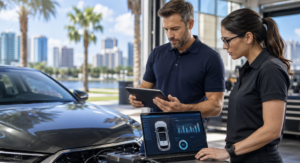
Orlando is widely recognized for tourism, but the city’s economy also includes a growing network of technology companies, research programs, digital-service providers, and innovation-focused organizations. The broader story of Orlando, Florida, on Wikipedia provides useful geographic and economic context for a market where transportation, insurance, hospitality, and professional services operate at a fast pace. Within that environment, automobile appraisal has become increasingly dependent on information technology.
Accurate valuations still require experience, judgment, and a careful physical inspection, but much of the work surrounding those skills now moves through digital systems. Vehicle identification data, market comparisons, photographs, maintenance records, mapping tools, secure document storage, and customer communication all contribute to the final report. 🚘💻
Orlando’s Technology Culture Reaches the Automotive Sector
Technology in Orlando is not limited to software startups or large corporate offices. It supports everyday businesses that need to collect information, serve customers, protect records, and make decisions efficiently. The City of Orlando’s future-ready city plan emphasizes connectivity, digital civic engagement, and modern digital services. That same emphasis on connectivity can be seen throughout the private sector.
Auto appraisal firms depend on reliable internet access, mobile devices, cloud platforms, digital photography, and responsive websites to manage assignments across a large metropolitan area. An appraiser may inspect a vehicle in one part of Central Florida, review comparable sales from another location, and deliver a completed report electronically without requiring the customer to travel to an office.
This digital approach does not replace professional judgment. It gives the appraiser better tools for organizing evidence. A vehicle’s condition, mileage, trim level, prior damage, restoration quality, modifications, rarity, and local demand still need interpretation. IT makes it possible to bring those details together in a structured format, creating a clearer record of how the value was developed.
Digital Vehicle Records Create a Stronger Starting Point
Every reliable appraisal begins with identification. The vehicle identification number, commonly called the VIN, connects the vehicle to important details such as manufacturer, model year, production information, body configuration, and other encoded specifications.
The National Highway Traffic Safety Administration explains that the VIN is central to identifying vehicles and supporting safety and recall records. Appraisers can use digital VIN tools to confirm that the vehicle being inspected matches the information supplied by the owner, insurer, attorney, dealership, or other requesting party. NHTSA’s VIN resources provide an authoritative foundation for understanding this identification system.
Digital records may also help organize title information, repair invoices, maintenance histories, equipment lists, prior valuations, and photographs. The appraiser still has to determine whether the records are complete and relevant. A polished digital file does not automatically establish accuracy. Its value comes from allowing the appraiser to compare documents, flag inconsistencies, and preserve the material used in the valuation.
Market Data Helps Turn Observations Into Defensible Value
A professional appraisal involves more than choosing a number from an online pricing page. Market data must be filtered according to the specific assignment. A late-model family vehicle, collector car, commercial truck, modified vehicle, and vehicle with accident-related diminished value may each require a different approach.
IT systems allow appraisers to search current listings, auction information, historical sales, regional pricing patterns, and comparable vehicles more efficiently than paper-based research allowed. Digital platforms can place hundreds of possible comparisons within reach, but the appraiser must still eliminate vehicles that differ too greatly in condition, mileage, equipment, location, or history.
The Orlando Economic Partnership’s technology-sector overview describes a regional environment shaped by startups, established IT companies, and digital transformation. That environment matters because modern appraisal work depends on the same capabilities used across other data-driven industries: organized databases, dependable software, secure communication, accurate search tools, and trained professionals who know how to interpret the results.
Technology speeds up the research process, while the appraiser remains responsible for deciding which comparisons are truly comparable. A listing price may reveal what a seller hopes to receive, while a verified sale can provide evidence of what a buyer actually paid. Differences in documentation, vehicle condition, customization, and regional demand must also be considered before the information contributes to a final opinion of value.
Mobile Technology Improves On-Site Inspections
Much of an appraiser’s work happens beside the vehicle rather than behind a desk. Smartphones and tablets have changed how information is gathered during an inspection. High-resolution photographs can document body panels, paint condition, glass, wheels, tires, interior materials, dashboard readings, engine compartments, cargo areas, aftermarket equipment, and visible damage.
Notes can be entered while the vehicle is present, reducing reliance on memory later. A mobile checklist can help ensure that required areas are examined and photographed consistently. Time stamps and organized image files can also create a clearer record of what the appraiser observed during the inspection.
Mobile access allows an appraiser to verify specifications, review the assignment, check prior documentation, and communicate with the client from the inspection location. GPS and mapping tools make scheduling across Orlando and surrounding communities more manageable. These capabilities are especially useful when the vehicle cannot easily be moved, when an appraisal is needed at a repair facility, or when several inspections must be completed in different parts of Central Florida.
The region’s interest in research and applied technology is reflected in UCF’s Science and Technology News, which covers work involving robotics, immersive systems, computing, engineering, and related fields. Auto appraisal is a specialized professional service, but it benefits from broader improvements in cameras, mobile computing, cloud access, and data processing.
Cloud-Based Reporting Makes the Evidence Easier to Review
A completed appraisal should present a logical path from inspection to conclusion. Cloud-based reporting systems help appraisers arrange photographs, vehicle details, condition notes, comparable data, calculations, supporting documents, and final conclusions in one professional report.
The client can receive the material quickly, store it electronically, and share it with an insurer, lender, attorney, court, dealership, estate representative, or other authorized party when necessary. Digital reports are also easier to search and preserve than folders filled with loose papers and printed photographs.
For consumers seeking local service, Auto Appraisal Orlando represents the type of specialized business that can use IT to make a technical process more accessible. A well-organized website can explain available services before the customer calls. Secure forms can collect basic assignment details. Electronic scheduling can reduce delays. Digital reports can preserve the evidence behind the valuation.
These features create convenience, but they also support transparency by giving the customer a clearer understanding of what was inspected and how the conclusion was reached. A report supported by organized photographs, market evidence, and documented observations carries more practical value than a number delivered without explanation.
Cybersecurity Protects More Than Office Computers
Auto appraisal files can contain names, contact information, vehicle identification numbers, photographs, insurance documents, legal correspondence, repair records, and other sensitive material. Protecting that information is part of running a responsible modern business.
Strong passwords, multifactor authentication, encrypted connections, controlled file access, dependable backups, software updates, and employee awareness can reduce avoidable risk. Access should be limited to the people who need the information, and old devices should be properly cleared before they are sold, recycled, or discarded.
The National Institute of Standards and Technology offers a Cybersecurity Framework 2.0 quick-start guide for small businesses. Its guidance is relevant to local service companies that may lack a large internal IT department but still handle valuable customer and business information.
An appraisal firm does not need the infrastructure of a national corporation, but it does need practical security policies that match the information it collects and the services it provides. A secure backup system also helps the business recover from hardware failure, accidental deletion, theft, malware, or storm-related disruption.
Local IT Support Keeps the Business Available
An appraisal company may depend on a relatively small collection of systems, yet each one can be essential. Email must work. The website must load correctly. Online forms must deliver submissions. Files must remain accessible. Mobile devices must synchronize. Reports must be backed up. Printers and scanners must function when physical records are involved.
A failure in any of these areas can slow an assignment or interrupt communication with a customer. Reliable IT support helps identify weak points before they cause a larger disruption. Routine maintenance, software updates, backup testing, device management, and website monitoring can be just as important as emergency repairs.
Orlando’s broader innovation network provides a strong setting for businesses that need technical support and digital expertise. The Florida High Tech Corridor connects businesses, entrepreneurs, universities, faculty, and students across a regional technology ecosystem. Its work reflects the depth of technical knowledge available throughout Central Florida.
Auto appraisal firms may not participate directly in every technology initiative, but they operate in a region where IT talent, research, business development, and digital services are increasingly connected. Local providers can help smaller companies improve cybersecurity, cloud storage, mobile access, website performance, data recovery, and day-to-day technical reliability.
Faster Communication Creates a Better Customer Experience
Customers often request appraisals during stressful or time-sensitive situations. A vehicle may have been damaged. An insurance claim may be disputed. A divorce, estate, bankruptcy, donation, financing decision, or legal matter may require documented value. A collector may need an updated valuation before changing insurance coverage.
In these situations, clear communication matters as much as speed. Customer relationship management tools, automated appointment confirmations, secure upload forms, electronic invoices, and status notifications can keep the process organized. The customer knows what information is needed, when the inspection is scheduled, and when the completed report is available.
These systems should support personal service rather than replace it. A customer still benefits from speaking with someone who understands the assignment and can explain the report in plain language. The best technology removes administrative friction so the appraiser can spend more time on inspection, research, analysis, and communication.
The Orlando Economic Partnership’s Orlando Tech Connect coverage highlights regional efforts to connect creative ideas, business growth, investment, and innovation. Local appraisal companies fit naturally into that larger story when they use technology to improve practical services for residents, businesses, insurers, attorneys, and vehicle owners.
Digital Photographs Preserve Important Details
Photographs have always been important in auto appraisal, but digital imaging has made visual documentation more complete and easier to organize. An appraiser can capture wide views of the entire vehicle, close-ups of damage, interior wear, odometer readings, identification plates, optional equipment, restoration work, and areas that may affect value.
Images can be labeled and placed beside the corresponding written observations in the report. This arrangement makes the findings easier for another person to review. It also reduces confusion when a report includes several areas of damage or multiple features that distinguish the vehicle from an ordinary comparison.
Image quality still matters. Poor lighting, excessive glare, incorrect angles, and incomplete coverage can hide important details. Technology provides the camera and storage tools, while the appraiser decides which images are necessary and whether they accurately represent the vehicle’s condition.
Artificial Intelligence Can Assist Without Making the Final Decision
Artificial intelligence is beginning to influence document review, image organization, customer service, and market analysis. In auto appraisal, AI may help sort photographs, summarize records, identify missing fields, organize comparable listings, or detect unusual patterns. These uses can save time, especially when an assignment includes a large volume of supporting material.
The final opinion of value still requires professional accountability. A system may identify visual similarities between vehicles without understanding restoration quality, local demand, hidden damage, documentation gaps, unusual options, or the purpose of the appraisal.
Human review remains essential because the same vehicle can require different valuation methods depending on whether the assignment concerns fair market value, diminished value, insurance coverage, litigation, financing, an estate, or another defined purpose.
UCF’s research and innovation programs demonstrate how Central Florida institutions are advancing technology while focusing on real-world applications. The most useful role for AI in appraisal is helping qualified professionals manage information more efficiently and devote greater attention to the judgment that technology cannot supply on its own.
Better IT Supports a More Defensible Appraisal
A defensible appraisal clearly explains the information considered, the methods used, and the reasoning behind the final value. IT supports this process by preserving source material and creating consistency. Templates can help ensure that important sections are included. Calculation tools can reduce arithmetic mistakes. Digital archives can preserve previous reports and supporting evidence.
Version control is also important. When a report is revised because additional documentation becomes available, the appraiser should be able to identify the current version and preserve an appropriate record of earlier work. Sending several unlabeled attachments through email can create confusion, while a properly managed reporting system keeps files organized.
Technology also makes quality review easier. Before the report is delivered, the appraiser can check photographs, verify figures, confirm vehicle specifications, review spelling, and ensure that the conclusion matches the evidence described throughout the document.
Conclusion
Behind every credible vehicle value is a chain of evidence. The appraiser identifies the vehicle, inspects its condition, reviews the assignment, studies the market, selects relevant comparisons, documents the findings, and explains the conclusion. Information technology strengthens each stage by making records easier to collect, research faster to complete, photographs easier to organize, reports easier to deliver, and files easier to preserve.
Orlando’s growing technology culture gives local auto appraisal businesses access to the connectivity, digital tools, research environment, and IT expertise needed to serve a modern market. The strongest results come from combining those resources with careful inspection and experienced judgment.
Technology supplies speed, structure, security, and reach. The appraiser supplies context, responsibility, and a defensible opinion of value. Together, they create a service that is more organized, transparent, and prepared for the demands of today’s vehicle owners and professional clients.